Choosing a quality daycare is one of the most important decisions you’ll make as a parent. With so many options in Florida, especially when you’re looking for something near your home and aligned with strong educational values, it can feel overwhelming. That’s why this guide walks you through how to choose the best daycare near you in 2026-2027 — including how to filter your search, what to look for when touring, and why the VESS model sets some preschools apart. If you’re already part of the Edu1st family or considering it, you’ll find this especially useful.
Why choosing the right daycare matters
When you entrust your child to a daycare, you’re not just choosing a place for them to be cared for while you work. You’re choosing an environment that will influence their developmental path — socially, emotionally, cognitively. Research shows children’s early years lay the foundation for lifelong learning. For parents, this means peace of mind: knowing your child is not only safe, but is engaged, challenged, and growing.
Beyond the direct child development benefits, daycare sets the tone for habits, attitudes toward learning, and relationships with peers. For parents of preschoolers affiliated with Edu1st, it’s even more relevant: you want continuity in values, educational approach, and language development. In Florida’s diverse and bilingual environment, that becomes a key differentiator.
Key criteria to evaluate when searching for a daycare
Location & logistics
Start simple: how near is the daycare to your home or workplace? A daycare “near you” means less commute, more convenience for drop-off and pick-up, and less stress for everyone.
Accreditation & credentials
Make sure the center is licensed in Florida, complies with state regulations, and ideally uses an approved curriculum. For example, the VESS curriculum is listed on the Florida Department of Education’s Approved School Readiness Curriculum list. Departamento de Educación de Florida+1 Credentials tell you the center takes formal standards seriously.
Curriculum & teaching approach
What will your child be doing each day? Are they just supervised, or are they guided through developmentally-appropriate learning, play, bilingual language exposure, emotional intelligence and critical thinking? The learning approach matters—especially if you have preschoolers who are used to or will benefit from an advanced curriculum like VESS.
Safety and environment
Ask about staff-to-child ratios, security procedures, health and safety practices, and physical environment (indoor & outdoor). A safe, clean, well-designed space supports learning and well-being.
Cost and affordability
Daycare costs vary widely in Florida. Consider not just tuition but what’s included (meals, enrichment, bilingual language, extra hours). Also check eligibility for programs like VPK (Voluntary Pre-K) if your child is age-eligible.
The VESS Model as a unique differentiator
What is the VESS Model?
Developed by Edu1st, the VESS Model (“Balanced Life with Meaning and Wisdom”) integrates neuroscience, emotional development, and values-based learning to form a “Culture of Thinking”. Edu1st+1 It’s not just about teaching ABCs and numbers—it’s about helping children think, ask questions, collaborate, and live with purpose.
VESS in Florida preschool settings
In Florida you’ll find preschools using the VESS curriculum. For example, one school states: “We follow the VESS curriculum, a holistic educational model approved by the Florida School Readiness Program… VESS is carefully crafted to utilize research-based strategies … beyond targeting developmental stages into nurturing important mind habits and thinking skills.” Smart Beginners Preschool+1 That means if you choose a VESS-based program, you’re selecting a daycare that aligns with holistic growth, bilingualism, and a responsive approach.
Why it matters for your child’s future
Choosing a program that uses the VESS model means investing in more than childcare: you’re selecting developmental advantage. Children don’t just learn facts—they build critical thinking, cultural awareness, bilingual capacity, emotional intelligence and autonomy. For parents of Edu1st prescholars, it means continuity in values and method when transitioning to elementary school and beyond.
How to search for “daycare near me” effectively in Florida
Using filters and map-based search
When you search “daycare near me” or “preschool near me” online (Google, map apps, childcare directories), use filters such as:
- Location (within X miles of home/work)
- Age groups (infants, toddlers, preschool, pre-K)
- Curriculum (bilingual, VESS, Montessori, etc)
- Hours of operation (early drop-off, after-care)
- Enrollment status / availability
These filters help you quickly short-list candidates that meet your needs.
Recommended filters for Florida parents
Because you’re in Florida, specifically:
- Check for VPK eligibility (for age 4 by Sept 1)
- Bilingual (English/Spanish) program if that’s important
- Curriculum approved by the Florida Department of Education (see approved list) Departamento de Educación de Florida
- Programs that follow VESS or a distinctive model
- Staff credentials and child-to-teacher ratio
Here’s one example of a quality preschool in Florida using the VESS model:
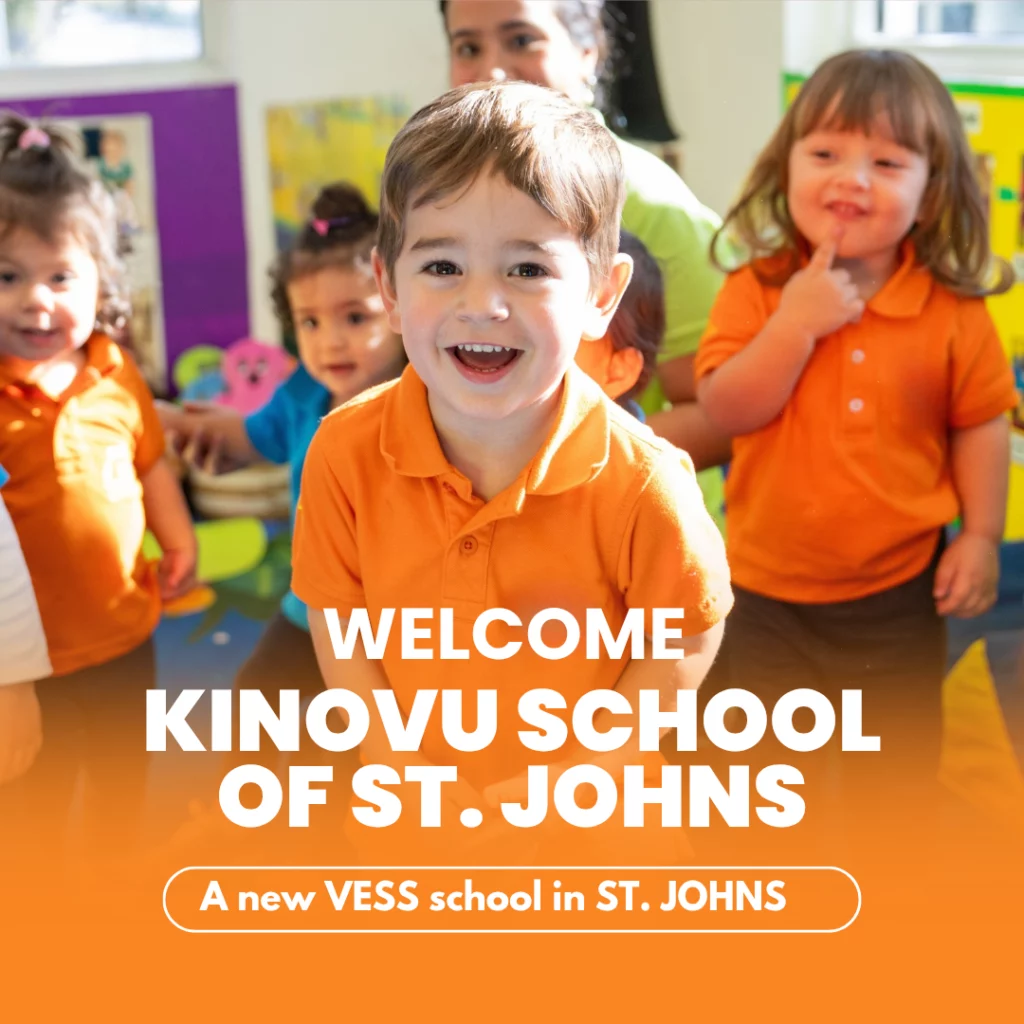
Kinovu School of Weston in Weston, FL. They state:
“We follow the VESS curriculum, a holistic educational model approved by the Florida School Readiness Program, … VESS is carefully crafted to utilize research-based strategies during play … nurturing important Mind Habits and thinking skills.” Kinovu
When you tour a daycare like this, ask:
- “How do you implement the VESS model in daily routines?”
- “What kind of bilingual activities and thinking-skills work do you offer?”
- “How do you measure student progress and partner with families?”
These questions help you assess whether the advertised curriculum is genuinely active.
Questions to ask when touring a daycare
Here’s a quick list of essential questions:
- What is your daily schedule for preschoolers?
- What curriculum do you use and how is it implemented?
- How many children per teacher in my child’s age group?
- Is bilingual instruction offered, and what languages?
- How do you handle child-emotion and social-skills development?
- How do you communicate with parents (app, reports, meetings)?
- What is your health and safety protocol (illness, emergencies)?
- Are meals/snacks included? Any dietary accommodations?
- Are enrichment programs (music, art, yoga, STEM) part of it?
- What is the cost, contract length, and what happens if I need to withdraw?
Bringing this list ensures you cover the major points.
What parents should look for during a visit
As you walk through the facility, keep an eye out for green flags: children engaged and smiling, teachers interacting one-on-one, bilingual signage, and playful yet purposeful classroom setups. And note any red flags: too many kids in a room, classrooms that look like daycare only (no learning structure), lack of parent communication, or outdated curriculum materials. A program using the VESS model will emphasize thinking, autonomy and meaningful play — so observe whether children are encouraged to ask questions, explore, and engage, rather than simply follow rote tasks.
Cost, subsidy & program options in Florida
Daycare tuition varies in Florida by region, age group and program type. But apart from tuition, you should ask about all-in costs, additional fees, and subsidies. If your child is age 4 by September 1, they may qualify for Florida’s VPK program (Voluntary Pre-K) which covers a portion of preschool hours at no cost to parents. Also check if the center accepts state school readiness vouchers, offers sibling discounts or flexible hours. Budgeting ahead of time reduces surprises.
How to transition your preschooler (especially if in Edu1st) to a new daycare
If your child is already a preschooler at Edu1st and you’re looking for a daycare transition or next step, keep continuity in mind. Talk to your current educators about the key habits and practices your child has adopted under the VESS model. When visiting the new daycare, ask how they align with those habits and values (thinking skills, bilingualism, autonomy). Introduce the child gradually, visit together, talk positively about the new place, and maintain a consistent drop-off routine to ease adaptation.
How to stay engaged with your child’s daycare experience
Even after you choose the daycare, your role remains central. Stay connected with teachers and staff through parent-teacher conferences or apps. Ask for regular updates on your child’s milestones and how you can reinforce learning at home. If the daycare uses the VESS model, ask how you as a parent can support the “Culture of Thinking” at home (e.g., asking open-ended questions, encouraging reflection, celebrating growth). Your involvement deepens the impact of the daycare experience.
Common mistakes to avoid when selecting a daycare
- Choosing solely on cost: Cheapest isn’t always best if curriculum, staff or safety is lacking.
- Neglecting curriculum alignment: If your child is used to a thinking-based model (like VESS), moving to something very basic might set them back.
- Ignoring bilingual/bicultural options: In Florida’s context, language and cultural exposure matter.
- Rushing without a tour: Visit, observe, ask questions.
- Taking one month only as trial: Good programs require consistency to yield benefits.
Bringing it all together: Your action plan
- Define your priorities (location, hours, bilingual, curriculum).
- Search online using filters + map for “daycare near me” + your city/zip.
- Narrow to 2-3 candidates (especially ones offering VESS or bilingual).
- Visit each, ask the questions above, observe.
- Compare cost, curriculum, communication and environment.
- Select and enrol; then stay engaged with your child’s journey.
Frequently Asked Questions (FAQs)
Q1: What age should I enroll my child in daycare?
A: Many daycares accept toddlers from 18 months or even younger, but for a preschool-level program you might consider age 3–4. It depends on your family’s schedule and your child’s readiness.
Q2: How do I know if a daycare is accredited or legitimate?
A: Ask for licensing information in Florida, staff credentials, and whether they follow an approved curriculum (the Florida Department of Education publishes an approved list) Departamento de Educación de Florida. Also check reviews and ask for a tour.
Q3: What does bilingual education in preschool mean?
A: It means the program regularly uses two languages (often English and Spanish) in instruction, routines, and play so that children build skills in both languages.
Q4: What is the VESS Model and why should I care?
A: The VESS Model is a holistic educational framework adopted by Edu1st and other preschools. It emphasises thinking skills, balanced development, emotional well-being, autonomy and value-based learning. For children, that means more than rote learning—it means preparing for life and learning.
Q5: How much does preschool/daycare cost in Florida?
A: Costs vary widely by region, age, hours and program type. Some programs accept subsidies or state-funded VPK for age 4. Always ask for full cost breakdown and what’s included (meals, enrichment, hours).
Q6: How can I ensure the transition is smooth for my child?
A: Visit the new centre ahead of time, talk positively about it, maintain familiar routines, and stay engaged with staff to monitor how your child adjusts.
Conclusion
Choosing the best daycare near you in 2026-2027 doesn’t have to be overwhelming — by focusing on location, curriculum, safety, and values you can zero in on the right place for your child. If you value a holistic, thinking-based approach, programs using the VESS Model offer a compelling differentiator. Remember: this isn’t just childcare; it’s an investment in your child’s early development, emotional growth, bilingual skills and future readiness.
If you’re interested in exploring how Edu1st’s VESS-based preschools operate, or want to connect with one of our campuses, feel free to contact us for more details. Make your visit, ask the right questions, observe the environment—and trust your parental instincts.